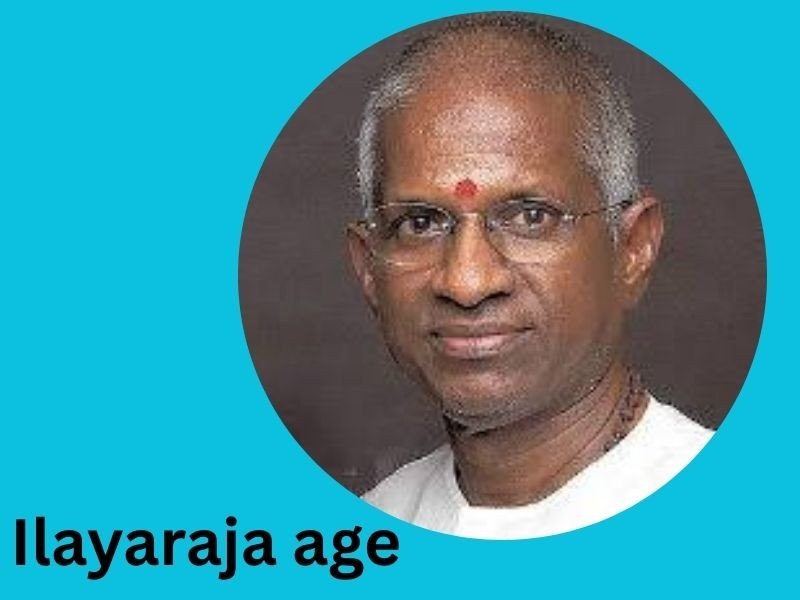
ilayaraja age
Introduction: ilayaraja age
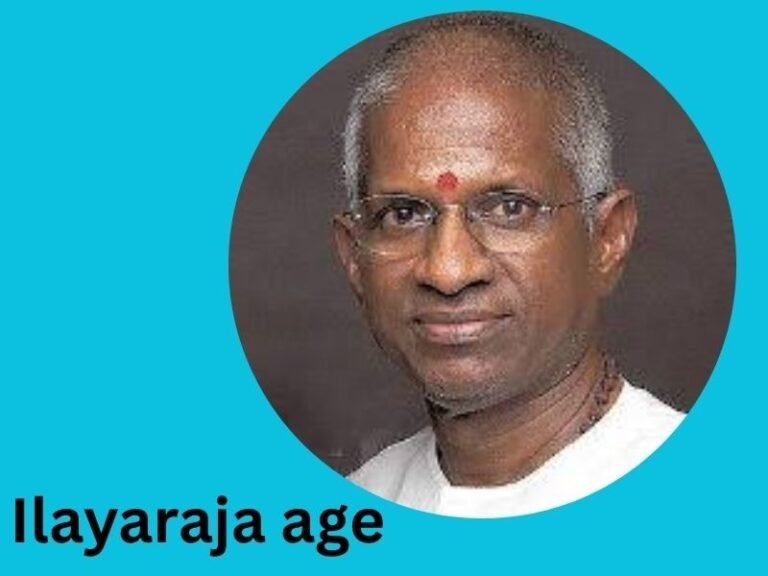
Ilaiyaraaja, often searched online by the spelling Ilayaraja, is an Indian music composer, lyricist, singer, instrumentalist and conductor. For more than five decades he has shaped the sound of South Indian cinema. Fans know him as “Isaignani” (the musical genius) and simply as “Maestro.” Searches for Ilayaraja’s age are common because his career has lasted so long that it spans several generations of listeners. Based on his widely documented date of birth, 2 June 1943, he is 83 years old as of October 2026.
Ilaiyaraaja is best known for his work in Tamil cinema, but he has also composed extensively for Telugu, Kannada, Malayalam and Hindi films. He introduced Indian film music to a new blend of folk melody, Western classical harmony and modern orchestration. This article covers his age and date of birth, his early life, his career, his awards, his reported net worth, his family and some lesser-known facts about his life.
Ilaiyaraaja Wiki Bio
| Attribute | Details |
|---|---|
| Real Name | Gnanadesikan (also known as Rasaiah) |
| Popular Name | Ilaiyaraaja (also spelled Ilayaraja) |
| Nicknames | Isaignani, Maestro |
| Profession | Music composer, lyricist, singer, instrumentalist, conductor |
| Date of Birth | 2 June 1943 (a few sources list 3 June) |
| Age | 83 years (as of October 2026) |
| Birthplace | Pannaipuram, Theni district, Tamil Nadu, India |
| Nationality | Indian |
| Hometown | Pannaipuram, Tamil Nadu |
| Father | Ramasamy |
| Mother | Chinnathayammal |
| Siblings | Pavalar Varadarajan, Gangai Amaran (brothers) |
| Education | Formal schooling details not publicly disclosed; trained in Western classical music under Dhanraj Master and with Trinity College of Music, London |
| Debut Film (as composer) | Annakili (1976, Tamil) |
| Languages Worked In | Tamil, Telugu, Kannada, Malayalam, Hindi |
| Spouse | Jeeva (died 2011) |
| Children | Karthik Raja, Yuvan Shankar Raja, Bhavatharini (died January 2024) |
| National Film Awards | 5 (Best Music Direction) |
| Civilian Honours | Padma Bhushan (2010), Padma Vibhushan (2018) |
| Political Nomination | Rajya Sabha (July 2022) |
| Height | Not publicly disclosed |
| Weight | Not publicly disclosed |
| Eye Color | Not publicly disclosed |
| Hair Color | Not publicly disclosed |
| Net Worth | Not publicly disclosed (online figures are unverified estimates) |
| Social Media | Official accounts on major platforms; follower counts change over time |
Table of Contents
Ilaiyaraaja: Date of Birth and Current Age
Ilaiyaraaja’s birth name is widely reported as Gnanadesikan, and he was known in his early years as Rasaiah (also written Rasayya). He adopted the name Ilaiyaraaja, meaning “young king,” early in his film career. His date of birth is most commonly given as 2 June 1943, and he celebrates his birthday on that date. A few sources list 3 June, so there is a small discrepancy in public records. The commonly cited date is 2 June 1943, and on that basis his age in October 2026 is 83.
He was born in Pannaipuram, a village in the Theni district of present-day Tamil Nadu. At the time of his birth, the region was part of the Madras Presidency under British rule. He is a Tamil, and the village of his birth remains closely tied to his public identity. He often speaks about it with affection and has drawn on rural melodies and folk traditions throughout his career.
Early Life and Education
Ilaiyaraaja grew up in a modest rural family. His father, Ramasamy, is reported to have worked in a plantation-related job, and his mother was Chinnathayammal. The family was not wealthy, and music was not a conventional career choice for a boy from a small village. Yet music was part of daily life in the region. Folk songs, devotional singing and village festivals exposed him to a rich oral tradition from childhood. These early influences are often cited as the foundation of the earthy, melodic quality that runs through his compositions.
He had brothers who also became involved in music. The best known are Pavalar Varadarajan, an elder brother who was a political and cultural figure and a musician, and Gangai Amaran, who became a music director, lyricist, director and actor. In his youth, Ilaiyaraaja joined a travelling music troupe led by his elder brother. The group performed at political gatherings and public events across Tamil Nadu, and the experience gave him a practical education in performance. He learned to play instruments, to accompany singers and to hold the attention of large crowds.
Details about his schooling are limited in public sources. What is better documented is his formal musical training after he moved to Chennai (then Madras). There he studied under a teacher known as Dhanraj Master. His lessons covered Western classical music, including harmony, counterpoint and notation. He also studied at Trinity College of Music, London, through correspondence-style examinations, and he is widely reported to have earned a gold medal in classical guitar. This training explains why his scores often combine South Indian melodic forms with Western orchestral structure, which was uncommon in Indian film music at the time.
Career Journey
Struggles and First Breaks
After moving to Chennai in the 1960s, Ilaiyaraaja worked as a session musician. He played guitar, keyboards and other instruments for established composers and, according to widely reported accounts, assisted music directors in the Tamil, Telugu and Kannada industries. This period was demanding. Work was irregular, and he was building a reputation slowly in an industry that already had celebrated composers. But it gave him a close view of how film music was composed, arranged and recorded, and he learned the practical details of studio work.
The Breakthrough with Annakili
His big break came with the Tamil film Annakili (1976). The soundtrack was a sharp departure from what audiences were used to. It brought folk-inflected melodies and a fresh orchestral palette into mainstream film music, and the songs became hits. The film’s music is often described as the beginning of a new era in Tamil cinema. After Annakili, offers arrived rapidly, and within a few years he was one of the most sought-after composers in South India.
The Golden Years
The late 1970s and the 1980s are widely regarded as the peak of his creative output. In this period he scored music for an enormous number of films, often working on several projects at once and delivering soundtracks at remarkable speed. His collaborations with directors such as Bharathiraja, K. Balachander, Balu Mahendra, Mani Ratnam and others produced some of the most remembered film albums in Indian cinema. He also worked closely with leading actors, including Rajinikanth and Kamal Haasan, and many of their best-known films are inseparable from his scores.
Singers such as S. P. Balasubrahmanyam, S. Janaki and K. J. Yesudas became closely associated with his compositions, and his songs became a part of everyday life in Tamil Nadu. They were played at weddings, on long bus journeys, on the radio and at family gatherings. The background score, which he treated as a form of storytelling rather than just an accompaniment, became one of his most admired contributions. Many viewers recall specific scenes mainly because of his music.
Beyond Tamil Cinema
Although his reputation was built in Tamil cinema, Ilaiyaraaja composed extensively in other languages. He worked in Telugu, Kannada and Malayalam films and also scored Hindi films, including projects that reached audiences across India. His Hindi work includes Sadma, the Hindi remake of the Tamil film Moondram Pirai, as well as later films such as Cheeni Kum and Paa, both associated with Amitabh Bachchan. These showed that his musical language could travel beyond regional boundaries.
Independent and Classical Projects
Ilaiyaraaja also explored music outside films. He released the albums How to Name It? and Nothing But Wind, which fused Indian classical ideas with Western instrumentation. Nothing But Wind featured the flautist Hariprasad Chaurasia. He composed Thiruvasagam in Symphony, a work that combined the Tamil devotional text Thiruvasagam with a Western orchestral treatment and was recorded with the Budapest Symphony Orchestra. He has also been reported as the first Indian to compose a full Western-style symphony, titled Valiant, a work associated with London orchestral musicians. In recent years he has continued to appear in concerts, including international performances that have drawn large audiences.
A Landmark Milestone
His work reached a symbolic milestone with the release of the film Thaarai Thappattai (2016), which is widely reported as the 1,000th film he scored. He has composed thousands of songs across his career. The exact numbers are quoted slightly differently across sources, but they are indisputably among the largest bodies of work by any film composer in the world.
Major Achievements and Awards
Ilaiyaraaja’s recognitions come from both government bodies and the film industry. The following are among the most widely documented:
National and Civilian Honours
He received the Padma Bhushan in 2010 and the Padma Vibhushan, India’s second-highest civilian award, in 2018. He also received the Sangeet Natak Akademi Award, which recognizes achievement in the performing arts. In July 2022, he was nominated to the Rajya Sabha, the upper house of India’s Parliament, by the President of India.
National Film Awards
He has won the National Film Award for Best Music Direction five times, for the films Sagara Sangamam (Telugu), Sindhu Bhairavi (Tamil), Rudra Veena (Telugu), Pazhassi Raja (Malayalam) and Thaarai Thappattai (Tamil). He has also been recognized with many state film awards and with honorary doctorates from universities in India.
Industry and Cultural Recognition
Besides awards, he holds an unusual position in Indian popular culture. His songs are studied by young composers, performed by bands and reinterpreted by contemporary artists. Many musicians describe him as a transformative figure who modernized South Indian film music while keeping it rooted in local melody. His influence is visible in the work of younger composers, including members of his own family.
Net Worth
Ilaiyaraaja’s exact net worth is not publicly disclosed. He has not published verified financial statements, and no reliable official source confirms his total wealth. Figures that appear online come from entertainment websites and fan-run portals. They vary widely from one source to another, so any single number should be treated as a rough estimate rather than a confirmed fact.
What can be said responsibly is that his income has likely come from several sources over a long career:
- Film music composition fees. He has scored music for more than a thousand films, and top music directors in the South Indian industry command significant fees.
- Royalties and music rights. Ownership and licensing of film music has been a major topic in his career. He has taken public positions on royalties for his compositions and has been involved in legal disputes over the use of his songs. The scale of any resulting income has not been publicly verified.
- Live concerts. He performs concerts in India and abroad, which can generate income from ticket sales and sponsorships.
- Albums and independent projects. His non-film releases have added to his earnings and reputation.
On lifestyle, he is known for a simple public persona. He is closely associated with his recording studio in Chennai, which has been central to his work for decades. Beyond that, details about his properties, investments and expenditures are not publicly confirmed. Readers should be cautious about websites that claim precise figures, since such numbers are unsourced estimates.
Physical Appearance
Ilaiyaraaja’s height, weight, eye color and hair color are not publicly disclosed in any verified source, so they are not listed here. His public image is easy to recognize all the same. He is typically seen in simple, traditional attire and is often associated with sacred ash or sandal marks on his forehead, reflecting his spiritual leanings. In his studio and on stage he carries a calm, composed presence, and many people who have worked with him describe a focused, disciplined manner.
Personal Life
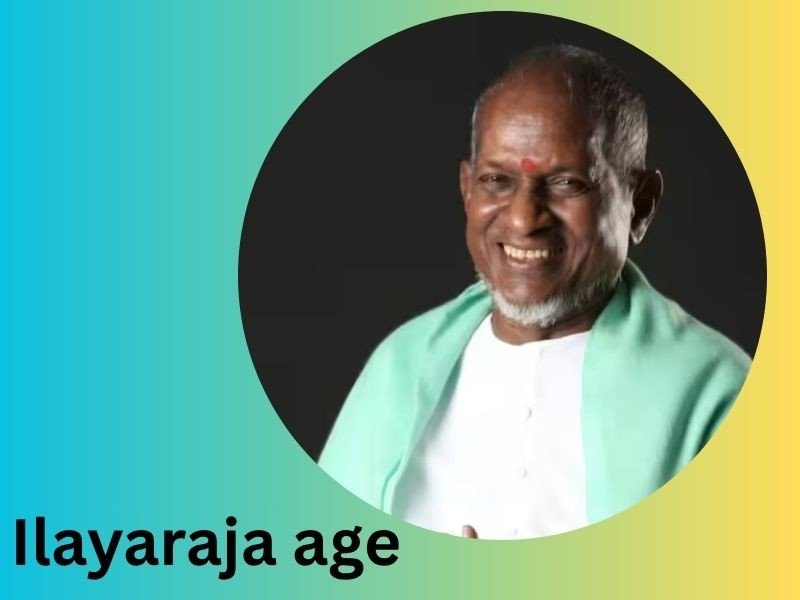
Ilaiyaraaja married Jeeva, and they had three children: Karthik Raja, Yuvan Shankar Raja and Bhavatharini. His wife, Jeeva, died in 2011.
His children have each made a mark in music. Karthik Raja is a music composer and singer who has worked in Tamil cinema. Yuvan Shankar Raja became one of the most popular composers of the following generation in Tamil cinema and is known for a style that appeals to younger audiences. Bhavatharini was a playback singer and composer, and she won the National Film Award for Best Female Playback Singer for the song “Mayil Pola” from the film Bharathi. She died in January 2024 in Sri Lanka after an illness, a loss that drew condolences from across the film and music community.
Ilaiyaraaja is known to be deeply spiritual. He has spoken in interviews about his devotion and about the role of faith and discipline in his creative life. He tends to keep personal details private, and information about his daily routine and private relationships beyond his immediate family is limited. This article includes only what has been publicly confirmed.
Social Media Presence
Ilaiyaraaja is present on major social media platforms through official or verified accounts, where updates about his concerts, releases and public appearances are shared. Follower counts on platforms such as Instagram, Facebook and X (formerly Twitter) change constantly, so exact figures are not given here. Readers should check the official profiles directly for the latest numbers. He is also widely discussed online, and fan communities regularly share his songs, concert clips and archival footage, which keeps his music in front of a new generation.
Interesting Facts
Ilaiyaraaja’s life offers many details that fans and curious readers enjoy. Some of the most widely reported are these:
He scored an extraordinary number of films. The milestone of scoring music for about a thousand films is rare in any industry, and it placed him among the most prolific film composers in the world.
He is credited with bringing folk music into the mainstream. At a time when film music was heavily influenced by older conventions, his use of village melodies and rural rhythms felt new and gave Tamil film music a distinctive voice.
His background scores are considered a craft in themselves. Many admirers argue that the emotional impact of certain scenes comes largely from his orchestration rather than the dialogue.
He has worked as a lyricist and singer too. Beyond composition, he has written lyrics and sung songs, and his own voice is a recognizable part of several popular tracks.
His family is a musical dynasty. His brother Gangai Amaran and his children Karthik Raja, Yuvan Shankar Raja and Bhavatharini all worked in music.
He has taken public stands on music rights. His disagreements with producers and record companies about royalties and the use of his songs have been widely covered and are part of the continuing debate about creators’ rights in India.
He remains active in his eighties. He continues to compose, conduct and perform, which is a notable achievement given the demands of the work.
FAQs
How old is Ilaiyaraaja?
Ilaiyaraaja was born on 2 June 1943, according to the date most commonly cited, which makes him 83 years old as of October 2026. A few sources give 3 June, so there is a one-day discrepancy in public records.
What is Ilaiyaraaja’s real name?
He is widely reported to have been born Gnanadesikan, and he was known as Rasaiah in his early years. He adopted the name Ilaiyaraaja in his film career.
Where was Ilaiyaraaja born?
He was born in Pannaipuram, a village in the Theni district of Tamil Nadu, India.
What is Ilaiyaraaja’s net worth?
His net worth is not publicly disclosed or officially confirmed. Estimates on websites vary widely and are not exact figures, so they should be treated with caution. His income is likely drawn from film composition, rights and royalties, concerts and albums.
Which was Ilaiyaraaja’s first film as a music director?
His debut as a film composer was the Tamil film Annakili, released in 1976. Its music is widely seen as a turning point in Tamil film music.
How many National Film Awards has Ilaiyaraaja won?
He has won the National Film Award for Best Music Direction five times, for Sagara Sangamam, Sindhu Bhairavi, Rudra Veena, Pazhassi Raja and Thaarai Thappattai.
Who are Ilaiyaraaja’s children?
He has three children: Karthik Raja and Yuvan Shankar Raja, both music composers, and Bhavatharini, a National Award-winning singer who died in January 2024.
Conclusion
Ilaiyaraaja’s journey from a small village in Theni to the heights of Indian music is one of the most remarkable stories in the country’s cultural history. Starting as a travelling musician and session player, he reshaped South Indian film music with his blend of folk tradition and Western orchestration. He scored music for about a thousand films, earned five National Film Awards and received the Padma Bhushan and Padma Vibhushan. Now 83, he continues to compose and perform, and his songs remain part of everyday life for millions of people. His exact net worth remains undisclosed, but his legacy needs no number. It lives in the melodies that generations still hum.
About the Author