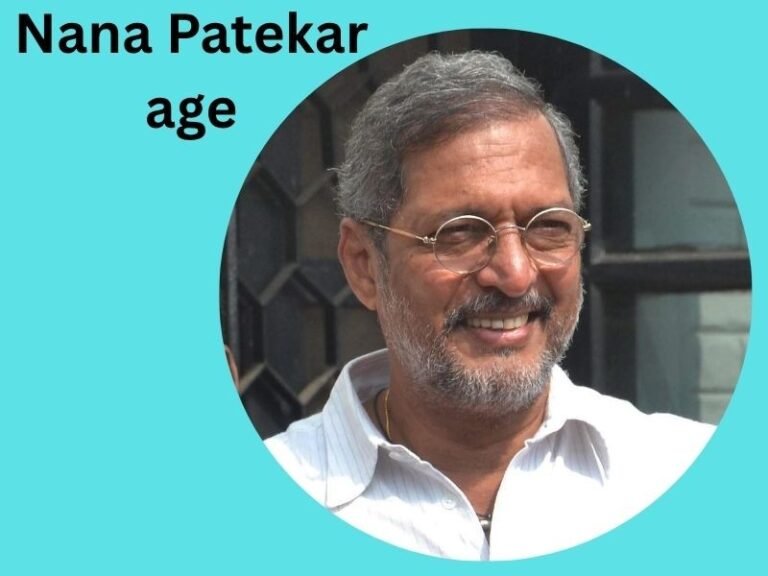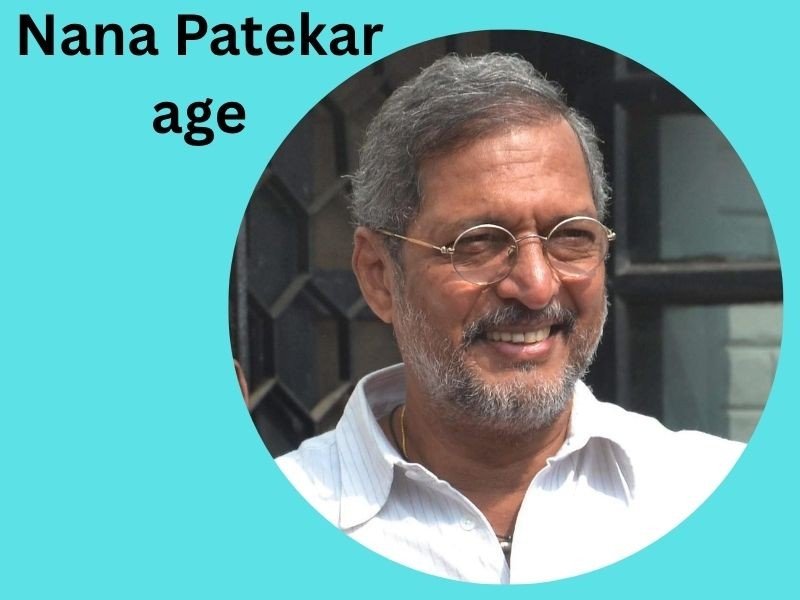
nana patekar age
Introduction: nana patekar age
Nana Patekar is one of the most respected actors in Indian cinema, a performer whose gravelly voice, piercing stare and fearless honesty have made him a household name across Hindi and Marathi films. Born Vishwanath Patekar, he is also a director, writer, playback singer and philanthropist. As of October 2026, Nana Patekar is 75 years old, having been born on 1 January 1951. Few Indian actors have sustained an equally intense presence on screen for close to five decades, and fewer still have done so while staying so far from the usual glamour of the film industry.
Readers searching for Nana Patekar’s age, biography and net worth are usually curious about more than numbers. They want to know how the son of a modest family from the Konkan coast became the actor behind characters like the ruthless underworld enforcer, the idealistic journalist and the soldier-turned-teacher. This article walks through his life in detail: his early years, his rise through theatre and cinema, his major awards, his work for drought-affected farmers, his personal life and what is and is not publicly known about his finances. Wherever a fact is not confirmed by reliable public records, it is marked as such rather than guessed.
Nana Patekar Wiki Bio
| Detail | Information |
|---|---|
| Real Name | Vishwanath Patekar |
| Popular Name | Nana Patekar |
| Date of Birth | 1 January 1951 |
| Age (October 2026) | 75 years |
| Birthplace | Murud-Janjira, Maharashtra, India |
| Nationality | Indian |
| Profession | Actor, director, writer, playback singer, philanthropist |
| Industry | Hindi and Marathi cinema |
| Education | Sir J.J. Institute of Applied Arts, Mumbai |
| Debut Film | Gaman (1978) |
| Breakthrough Films | Ankush (1986), Parinda (1989) |
| Directorial Work | Prahaar (1991) |
| Notable Awards | National Film Awards, Filmfare Awards, Padma Shri (2013) |
| Father | Dankar (also spelled Dinkar) Patekar |
| Mother | Sangana Patekar |
| Spouse | Neelakanti Patekar |
| Children | Son: Malhar Patekar |
| Charity Work | Co-founder of the Naam Foundation (2015) |
| Height | Not publicly disclosed |
| Weight | Not publicly disclosed |
| Eye Colour | Not publicly disclosed |
| Hair Colour | Not publicly disclosed |
| Net Worth | Not publicly disclosed (online estimates vary widely and are unverified) |
| Social Media Followers | Not verified; counts change over time |
Table of Contents
Nana Patekar: Date of Birth and Current Age
Nana Patekar was born on 1 January 1951 in Murud-Janjira, a coastal town in Maharashtra’s Raigad district, known for the historic sea fort of Janjira. His birth name is Vishwanath Patekar, and “Nana” is the nickname that eventually became his professional identity. Because his date of birth is consistently reported across major film databases and biographical profiles, his age can be calculated reliably. In October 2026 he is 75 years old, and he will turn 76 on 1 January 2027.
Age-related searches about him have become common for a simple reason: audiences are often surprised by how much energy he still brings to the screen. Even in his seventies, he continues to take on roles that require emotional intensity, and he is often described as an actor who has never relied on star glamour or youthful looks. His age, in that sense, is part of his story rather than a limitation. It reflects a career built on craft and presence rather than fashion.
Early Life and Education
Nana Patekar was born in a Marathi-speaking family in Murud-Janjira. His parents were Dankar (also spelled Dinkar in some accounts) Patekar, a painter, and Sangana Patekar. His father was associated with textile painting and a small business, and the family’s circumstances were far from wealthy. The spelling of his father’s name varies across sources, which is a good reminder of how limited verified family documentation is for many public figures. What is consistently reported is that the family later moved to Mumbai, where Nana grew up in a modest, working-class setting.
His childhood was shaped by financial struggle. Widely reported accounts say that when his father’s business ran into trouble, young Nana had to start earning while still a schoolboy. He took on small jobs, including work related to painting and poster design, to help support the household. Those years taught him a form of discipline and street-level observation that later fed directly into his acting. Many of the rough, restless, plainspoken characters he played had their roots in the neighbourhoods and people he saw growing up.
For formal education, he studied at the Sir J.J. Institute of Applied Arts in Mumbai, one of India’s best-known art institutions. This detail is often overlooked, but it matters. His training in applied arts gave him a visual sensibility that is still evident in the way he composes a scene and uses his face and posture. He has also been known to paint, which connects him to his father’s artistic background. Alongside his studies, he became drawn to the stage, and Marathi theatre became his real classroom. Specific details about his early schooling, such as the names of his primary and secondary schools, are not publicly documented in reliable sources, so they are not included here.
Career Journey
The Theatre Years
Before cinema, there was the stage. Nana Patekar spent his formative years in Marathi theatre and experimental drama in Mumbai, a scene that has produced some of India’s finest actors. Theatre taught him voice modulation, timing and the ability to hold an audience’s attention without the aid of editing or close-ups. These skills became his signature. Even in his film roles, he is known for delivering dialogue in a restrained, almost conversational way that suddenly erupts into controlled fury.
Stage work also trained him to improvise and to think deeply about a character’s inner life rather than just their outward behaviour. Directors and co-stars have often remarked on his preparation and his willingness to push scenes in unexpected directions. This theatre-first approach is one reason his performances are frequently called “method-like,” though he has never presented himself as following any single acting school.
Entering Films: Gaman and the Early Roles
His film debut came in 1978 with Gaman, directed by Muzaffar Ali, a quiet, socially aware drama about migrant workers in Mumbai. His part was small, but it announced a serious actor rather than a conventional leading man. The early 1980s brought a handful of supporting roles, among them Aaj Ki Awaaz (1984), but recognition was slow. He also appeared in small roles in films with an offbeat or realistic bent, including Salaam Bombay! (1988), the internationally acclaimed Mira Nair film.
These were not years of fame or money. Like many talented actors without a godfather in the industry, he moved between theatre and occasional film work while waiting for a role that would let him show what he could do. That patience was rewarded in the mid-1980s.
The Breakthrough: Ankush and Parinda
The film that changed his trajectory was Ankush (1986), a gritty drama about unemployed young men pushed into violence. Nana’s performance as a hot-headed, volatile character stunned audiences and critics, and the film became a landmark of parallel-meets-mainstream cinema. It established the persona that would define much of his early fame: an intense, unpredictable figure who feels dangerous and deeply human at the same time.
Then came Parinda (1989), directed by Vidhu Vinod Chopra, in which he played the menacing gangster Anna Seth. The role became one of the most celebrated villain performances in Hindi cinema. Anna Seth was not a cartoonish criminal but a calm, calculating man whose cruelty was all the more frightening for being understated. His work earned him both a Filmfare Award for Best Supporting Actor and a National Film Award for the same category, cementing his reputation as one of the finest actors of his generation.
Prahaar and Krantiveer: Leading Man and Director
The early 1990s showed that Nana Patekar was not only a brilliant supporting actor but a lead capable of carrying a film. He wrote and directed Prahaar (1991), a drama about army discipline and a man’s moral awakening. To prepare, he reportedly underwent military training, an experience that deepened his lifelong respect for the armed forces. Prahaar remains an important marker of his creative ambition, since it showed that he had stories and a point of view of his own to tell.
Krantiveer (1994), directed by Mehul Kumar, became one of the biggest hits of his career. As the cynical, rebellious Pratap Narayan Tilak, who evolves into a crusader against injustice, he delivered a performance of fire and wit, and the film’s dialogues became part of popular culture. The role won him the National Film Award for Best Actor and the Filmfare Award for Best Actor. It was the moment the industry and the public fully acknowledged him as a leading man on his own terms.
Versatility in the Nineties and Early 2000s
What separates Nana Patekar from many of his contemporaries is range. Through the 1990s he moved between menace, comedy, romance and social drama with ease. In Tirangaa (1993) he played a patriotic army officer opposite Raaj Kumar, in Khamoshi: The Musical (1996) he gave a tender performance as a deaf-mute father, and in Agni Sakshi (1996) he played an obsessive, frightening husband, work that again drew major awards attention. In Yashwant (1997) he delivered one of the most quoted monologues in Hindi cinema about the helplessness of the common man, a line that still circulates widely today.
He also lent his voice as a playback singer for a few films, including Yeshwant (1997), Wajood (1998) and Aanch (2003). Another notable role was in Ab Tak Chhappan (2004), where he played Inspector Sadhu Agashe, an encounter specialist, in a film often praised for its realistic depiction of the Mumbai police and underworld. Apaharan (2005) and Taxi No. 9211 (2006) further showed his comfort with both gritty drama and urban thrillers.
The Comedy Turn and the Modern Era
Audiences who knew him mostly for dark roles were delighted when he showed his comic timing in Welcome (2007) as the eccentric don Uday Shetty, a character who became a fan favourite and returned in Welcome Back (2015). He balanced that with weightier work, such as the political drama Raajneeti (2010), in which he played a pivotal role, and he was also seen in the action film Wanted (2009).
In Marathi cinema, one of his most acclaimed performances came in Natsamrat (2016), directed by Mahesh Manjrekar and adapted from a celebrated Marathi play. He played an aging stage actor facing the heartbreak of family betrayal, and critics and audiences hailed it as one of the best performances of his later career. More recently he has appeared in films such as The Vaccine War (2023) and Vanvaas (2024), and film databases list O Romeo as a 2026 release. He continues to be sought after by directors who want gravitas in a role.
Major Achievements and Awards
Nana Patekar’s trophy shelf reflects the respect he commands. He has won multiple National Film Awards, including recognition for Best Supporting Actor for Parinda and Best Actor for Krantiveer. He has also won several Filmfare Awards across the Best Actor and Best Supporting Actor categories for films including Parinda, Krantiveer and Agni Sakshi. The exact total of awards varies slightly by source, so it is safest to say he is among the most decorated actors of his generation rather than quote a number that cannot be confirmed here.
Beyond film trophies, he received the Padma Shri, one of India’s highest civilian honours, in 2013, in recognition of his contribution to the arts. His performances in Natsamrat and other Marathi projects also strengthened his standing in regional cinema, where he is revered as a custodian of the theatrical tradition. Another achievement worth noting is that he is among the few actors who also directed a film (Prahaar) that earned lasting respect.
His social contribution deserves equal attention. In 2015, he co-founded the Naam Foundation with actor Makrand Anaspure to help farmers affected by drought in Maharashtra. The organisation has worked on relief for farmer families, water conservation efforts and support during distress. Many people consider this work as important to his legacy as any film role, and it reinforced the image of an actor who is willing to put his name behind causes rather than endorsements.
Net Worth
Net worth is one of the most searched details about any celebrity, but it is also the least reliable. Nana Patekar has not publicly disclosed his income, assets or tax details, and no official source confirms his wealth. What exists online is a wide spread of estimates from entertainment and celebrity websites, and these should be treated as rough guesses rather than facts.
The numbers vary dramatically. One site puts his net worth around $7 million, another says around $15 million, and yet another claims about $40 million. Some pages even contradict themselves within the same article. This enormous spread is itself a signal that the figures are not drawn from verified financial records, and many of these pages are low-quality, automatically generated content. Readers should therefore take any single number with caution. A responsible summary is that estimates range from several million to a few tens of millions of US dollars, with no confirmed exact figure.
What can be said with more confidence is where his income is likely to come from. His primary earnings come from acting in feature films across a career of more than four decades, with additional income from the films he has directed and from occasional television and brand associations. Compared with many Bollywood stars, he is known for taking on endorsements sparingly. Some websites mention a Mumbai home and various investments, but those claims rarely cite verifiable documents, and details such as property values are not publicly confirmed.
Nana Patekar’s lifestyle also suggests that wealth is not his public identity. He is widely reported to prefer a simple, unflashy life and is known to spend significant time at a farmhouse near Pune rather than in the social whirl of Mumbai’s film circuit. He has also directed a considerable part of his public energy and reported personal resources toward charitable work through the Naam Foundation, although the specific amounts are not publicly disclosed. In short, his net worth is best described as substantial but unverified, and any exact figure should be regarded as an estimate, not a fact.
Physical Appearance
Many fan sites list precise measurements for Nana Patekar, but these are not backed by official or verified sources. His height, weight, eye colour and hair colour are not publicly disclosed in reliable documentation, so they are not stated here. What is visible and widely recognised is his on-screen presence: a lean, wiry frame, a weathered face and a penetrating gaze that directors often use to great effect. In recent years he has appeared with greying hair and a rugged look that suits the older, authoritative characters he plays. His appearance has always been secondary to his voice and expressions, which carry most of the emotional weight in his performances.
Personal Life
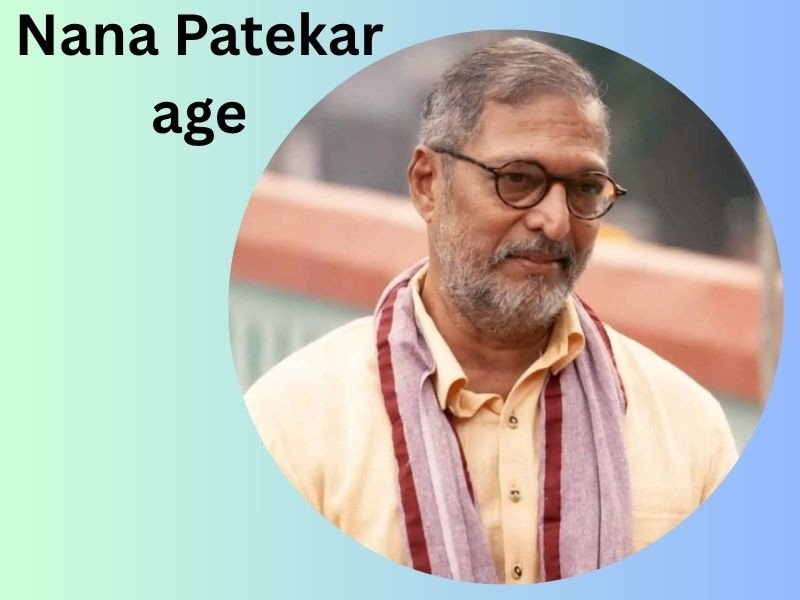
Nana Patekar is a notably private man, and the verified information about his family is limited. He was married to Neelakanti Patekar, and they have a son named Malhar Patekar. Some biographical sources place the marriage in 1978, but the exact date is not consistently confirmed, so it is best treated as reported rather than established. It has also been widely reported in the media that the couple have lived separately for many years, though neither has made extensive public statements about their private arrangements, and details of that are not publicly confirmed.
Nana has generally kept his family out of the spotlight, rarely giving long interviews about his marriage or his son. This reticence is consistent with his public persona: he is known for speaking bluntly on social and national issues, yet he guards his home life. Specific details about relationships beyond his marriage are not publicly verified and are not discussed here.
A note on controversy is appropriate for completeness. In 2018, actress Tanushree Dutta made allegations about an incident during a film shoot in 2008, which brought him into the centre of India’s #MeToo conversation. He denied the allegations, and the police case did not result in a conviction. It is a matter of public record that the allegations were made and denied, and readers can consult reputable news sources for the legal outcome and its latest status.
Social Media Presence
Nana Patekar is not known as a heavy social media user, and he does not cultivate the kind of daily online persona seen among many film stars. Verified information on his accounts and follower numbers is not consistently available from authoritative sources, so exact follower counts are not given here. Follower numbers on any platform change constantly, so anyone wanting current figures should check his official, verified profiles directly. Much of the social media content about him is created by fan pages and film promotion accounts rather than by the actor himself. His public presence is felt more through interviews, film promotions and the work of the Naam Foundation than through regular posting.
Interesting Facts
Several details about Nana Patekar surprise people who know him only from film posters. He trained at an art institute and has a lasting interest in painting, which links him directly to his father’s profession. He also wrote and directed Prahaar, which drew on military themes, and he is known for his deep respect for the armed forces. He sang as a playback artist in a few films, which many fans do not realise.
His dialogue delivery has produced some of the most quoted lines in Indian cinema, especially the powerful monologue from Yashwant about the common man’s struggles. He is equally at home in Hindi and Marathi cinema and has carried both industries with distinction. He is also known for refusing to follow industry trends, and he has often chosen to say no to roles or projects that did not match his convictions. Finally, he has built a reputation as an actor who gives genuine voice to social concerns, and his Naam Foundation work in drought relief is a continuing example.
FAQs
How old is Nana Patekar?
Nana Patekar was born on 1 January 1951, which makes him 75 years old as of October 2026. He will turn 76 on 1 January 2027.
What is Nana Patekar’s real name?
His birth name is Vishwanath Patekar. “Nana” is his well-known nickname and the name by which he has worked throughout his career.
Where was Nana Patekar born and educated?
He was born in Murud-Janjira in Maharashtra and studied at the Sir J.J. Institute of Applied Arts in Mumbai. Details of his earlier schooling are not publicly documented.
What is Nana Patekar’s net worth?
His net worth is not publicly disclosed. Online estimates range widely, from around $7 million to around $40 million depending on the website, and none of them is based on verified financial records. These should be treated as rough estimates only, not exact figures.
What are Nana Patekar’s most famous films?
Among his best-known works are Ankush, Parinda, Prahaar, Krantiveer, Tirangaa, Khamoshi, Agni Sakshi, Yashwant, Ab Tak Chhappan, Welcome and the Marathi film Natsamrat.
Has Nana Patekar won any major awards?
Yes. He has won National Film Awards and Filmfare Awards, including honours for Parinda and Krantiveer, and he received the Padma Shri in 2013.
Who are Nana Patekar’s wife and son?
His wife is Neelakanti Patekar and his son is Malhar Patekar. Beyond that, reliable public information about his family is limited.
What social work is Nana Patekar known for?
He co-founded the Naam Foundation in 2015 with Makrand Anaspure to support farmers affected by drought in Maharashtra.
Conclusion
Nana Patekar’s journey from a modest childhood in Murud-Janjira to the front rank of Indian cinema is a story of talent, discipline and conviction. At 75, he remains an actor whose work is defined by honesty rather than glamour. From the raw energy of Ankush and the chilling calm of Parinda to the anguish of Natsamrat, he has shown a remarkable range, and his Padma Shri and multiple National and Filmfare Awards confirm the respect he has earned. His net worth, though widely speculated about, remains undisclosed, and what truly defines his legacy is not wealth but influence: on fellow actors, on audiences who quote his dialogues and on farmers who have benefited from the work of the Naam Foundation. Few careers show so clearly how art and conscience can walk side by side.
About the Author