geeta kapoor age
Introduction: Geeta Kapoor Age
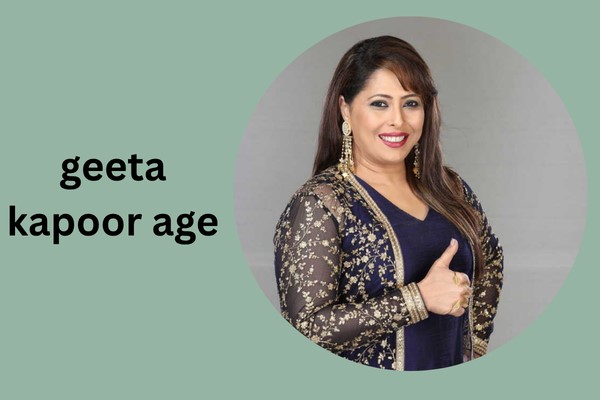
Geeta Kapoor is a name that carries immense weight in the world of Indian dance, choreography, and television entertainment. When people ask about Geeta Kapoor age, they are often curious not only about the number of years she has lived but also about the depth of experience, growth, and transformation that those years represent. Born on 5 July 1973 in the bustling city of Mumbai, India, Geeta Kapoor reached the age of 52 years in 2026, but to describe her simply by age would be to overlook the profound impact she has had on dance culture, dance education, television, popular entertainment, and the lives of countless aspiring performers. Geeta’s life began in a city that is the beating heart of the Indian film industry, where the sounds of music, movement, creativity, and cinematic expression are always present. In the narrow lanes and vibrant neighborhoods of Mumbai, Geeta’s early years were shaped by a world where dance was not just an art form but a language, a way of expressing emotion, rhythm, and identity. Growing up amid the cultural richness of Mumbai, where street performances, film shoots, music studios, and artistic dialogue were part of the everyday rhythm, Geeta’s love for dance took root at an early age. Even as a young girl, she would watch films repeatedly, not merely as entertainment, but as an education in movement, expression, timing, and emotion. Dance for her was not a hobby but a calling, an early spark that would grow into a lifetime pursuit.
Table of Contents
Geeta Kapoor Wiki Bio
| Field | Details |
|---|---|
| Full Name | Geeta Kapoor |
| Nickname | Geeta Maa |
| Profession | Choreographer, Television Judge |
| Date of Birth | 5 July 1973 |
| Age (as of 2026) | 52 Years |
| Birthplace | Mumbai, Maharashtra, India |
| Nationality | Indian |
| Hometown | Mumbai, India |
| Religion | Hinduism |
| Zodiac Sign | Cancer |
| Education | Not Publicly Known |
| Debut (Film Industry) | Assistant Choreographer under Farah Khan |
| Famous For | Dance India Dance, India’s Best Dancer |
| Years Active | 1990s – Present |
| Marital Status | Unmarried |
| Boyfriend / Relationship | Linked with Rajeev Khinchi (rumored) |
| Net Worth | Approx. $1–3 Million (estimated) |
| Hobbies | Dancing, Traveling, Teaching |
| Known As | One of India’s Top Female Choreographers |
| Mentor | Farah Khan |
Early Years and the Making of a Dancer
Geeta Kapoor’s early years were marked by an unyielding fascination with dance. During her childhood she often found herself moving to music wherever she heard it, learning not from formal instruction alone, but from observation, imitation, and an innate sense of rhythm that guided her. In a culture where Bollywood dances shape the collective imagination of millions, Geeta’s early fascination with the medium became the foundation of her artistic identity. She grew up watching screen legends perform dance sequences that were larger than life, powerful embodiments of emotion, story, and spectacle. Her home environment was one in which her passion was encouraged, and while her family did not belong to the film industry, they supported her love for movement and expression, recognizing that her talent was not ordinary. By the time she was a teenager, Geeta had committed herself to serious training, striving to refine not only her natural instincts but also the discipline and technique demanded by professional performance. At around the age of fifteen, Geeta made perhaps the most consequential decision of her early life when she joined the troupe of the renowned choreographer Farah Khan. This step would transform her from a passionate student of dance into a practitioner entering the professional world of choreography and film. Farah Khan was already emerging as one of the most respected names in choreography, and under her mentorship, Geeta was exposed to the demanding world of cinema dance production, learning how choreography is coordinated with camera angles, music cues, director vision, costume design and actor performance. It was there that she began to understand that dance, while beautiful in isolation, becomes exponentially more powerful when it serves storytelling, character emotion, and cinematic rhythm. These early years of training, observation, backstage work, and performance rehearsals were not glamorous; they were full of painstaking hours, repetition, corrections, and relentless effort. Yet through this period, Geeta’s drive never waned because she understood that mastery of dance requires patience, humility, and an openness to continual learning. She absorbed everything around her, developing both technical capability and emotional intelligence — the ability to read performers, understand audiences, and translate intention into movement.
Rise in Bollywood: From Assistant to Lead Choreographer
The Indian film industry, globally known as Bollywood, is a space where choreography plays a central role in storytelling, wherein songs and dances are integral to the emotional core of films. In this world, Geeta Kapoor’s rise was not immediate but was built upon years of dedication, experience, and incremental recognition. Having started as an assistant to Farah Khan, Geeta worked on some of the biggest film projects of the 1990s and early 2000s. She worked behind the scenes on film sets, learning not just the mechanics of dance routines but also the complex collaboration between choreographers, directors, music composers, cinematographers, actors, and production teams. Each of these collaborations taught her something new about how dance connects with narrative, how movement can enhance character development and emotional engagement, and how to manage large groups of performers with precision. Gradually, her talent became visible to other creative leaders in the industry, and she began receiving opportunities to choreograph dance sequences independently. This transition marked a new chapter in her career — one in which she was no longer just learning but creating. Her first assignments as a lead choreographer were demanding; she was called upon to produce numbers that blended traditional Indian aesthetics with contemporary styles and that could appeal to diverse audiences. Her ability to balance innovation with respect for classical tradition quickly gained her recognition as a reliable and creative force in choreography. She brought to every project a sense of thoughtful experimentation, seamlessly blending elements of Indian classical dance, folk styles, urban contemporary movement, and global influences to create pieces that were visually striking, emotionally resonant, and rhythmically dynamic. Film directors began to trust her vision, musicians valued her sense of timing and composition, and actors found in her choreography a partner who could bring out their best performance. Her work quickly became known not just for technical excellence but for its capacity to connect with audiences on a deeper level — to evoke joy, wonder, nostalgia, and energy simultaneously.
Notable Bollywood Projects and Breaking Boundaries
As Geeta Kapoor’s career blossomed, she was entrusted with choreography for some of the most memorable film sequences of her generation. Her work spanned everything from dramatic romantic pieces to high intensity group performances, each showcasing her unique sensibility and musical intelligence. Her choreography was not confined by genre; she moved fluidly between upbeat dance numbers that energized audiences and slower, more emotive pieces that relied on subtlety and nuanced expression. In the films she worked on, dance was not an add‑on but an essential part of the viewer’s experience, a manifestation of feeling that words alone could not convey. Her ability to draw out performances that felt authentic, dynamic, and memorable made her one of the go‑to choreographers in an industry that constantly demands both novelty and emotional depth. As television began to grow as a platform for dance and performance, Geeta Kapoor’s experience in film prepared her perfectly for this transition. She had spent decades understanding how to teach movement, how to communicate with performers of different skill levels, and how to translate artistic vision into physical expression. These skills would soon propel her into a new phase of her career, one that would make her a cultural icon and household name across millions of Indian living rooms.
Television Stardom: Becoming “Geeta Maa”
When dance reality television shows started gaining popularity in India, Geeta Kapoor emerged as more than just a choreographer; she became a mentor, judge, and symbol of artistic authority. Her presence on television unveiled a different side of her personality — one that was warm, encouraging, candid, and deeply invested in the growth of young dancers. Her journey on television began with shows that assessed raw talent and gave opportunities to performers from diverse backgrounds. What set her apart from many judges was not merely her technical expertise but her heart. Contestants found in her not just criticism but insight, guidance, empathy, and a genuine desire for them to succeed. She did not see dancers as competitors to be judged and dismissed; she saw them as individuals with stories, challenges, dreams, and potential waiting to be unlocked. This humanity in her approach earned her the nickname “Geeta Maa”, a term of respect, affection, and endearment that reflected how deeply she connected with participants and audiences alike. On television, Geeta was both strict and supportive — exacting precision in dance but also generous in encouragement. Viewers saw her laughing, dancing, coaching, correcting, celebrating, comforting, and inspiring. She became a figure who not only judged performances but shaped them, helping dancers evolve not only in technique but in confidence, expression, stage presence, and artistry. Her television appearances expanded her impact beyond film choreography into the hearts of audiences of all ages and backgrounds, making her a mentor to millions who saw in her someone who could guide them both creatively and personally.
Dance Philosophy and Teaching Style
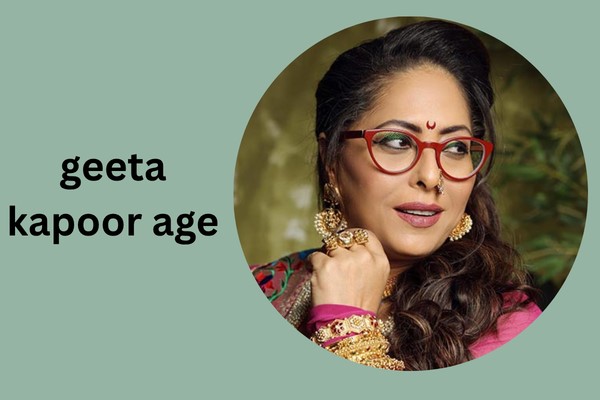
To understand Geeta Kapoor’s influence fully, it is essential to explore her dance philosophy — a philosophy grounded in respect for tradition, curiosity about innovation, and an unwavering belief in the potential of every dancer. Geeta has always maintained that dance is not just a technical skill but a language of the soul, a form of expression that transcends words and connects directly with emotion. Her approach to teaching reflects this belief. She emphasizes not only posture, rhythm, and precision but also musicality, emotional awareness, and authenticity of expression. She sees dancers not as machines to be programmed but as living, breathing artists whose unique identity and story shape their movement. Her classes and coaching sessions are known for demanding discipline while also nurturing individual creativity. She encourages dancers to dig deep into the reasons behind each movement, to feel the music instead of merely counting steps, and to let their personality emerge as they perform. This philosophy has made her teaching impactful for dancers at every level — from novice students to professional performers. Moreover, Geeta’s insistence on respect for classical foundations alongside experimentation with contemporary movement has enabled her to remain relevant in a world where dance forms are constantly evolving. She bridges the old and the new, helping students understand that tradition and innovation are not opposites but complementary forces that can elevate each other when balanced with awareness and intention.
Personal Life, Interests, and Off‑Stage Persona
While Geeta Kapoor’s professional life has often been visible to the public, her personal life has been more private, revealing only what she chooses to share. She has remained unmarried, focusing much of her time and energy on her craft, her students, and her creative journey. Her off‑stage persona is marked by humility, thoughtfulness, and an unpretentious approach to life. She has sometimes been linked in the media with choreographer and model Rajeev Khinchi, yet she has never allowed personal speculation to overshadow her artistic identity. For Geeta, dance has always been more than a profession; it has been a medium of self‑discovery, discipline, joy, and human connection. Her interests extend beyond choreography and television into the broader realm of performing arts, cultural dialogue, and creative collaboration. She values travel as a way to experience new forms of expression, music traditions, and artistic communities around the world. These experiences inform her choreography, enrich her teaching, and fuel her imagination. Despite her stature and success, she remains grounded — sharing her learning generously, celebrating the accomplishments of her students, and continuing to push herself to grow as an artist.
Legacy and Lasting Influence
Geeta Kapoor’s legacy is not measured simply by the number of films she worked on or the television shows she judged; it is measured by the millions of dancers who have been inspired by her story, guided by her wisdom, taught by her technique, and encouraged by her belief in their potential. Her influence on modern dance culture in India is profound. She helped democratize dance by showcasing performers from all corners of the country and by demonstrating that talent can emerge from anywhere, not just from established studios or elite institutions. She encouraged a generation to see dance as a discipline that demands effort, resilience, humility, and joy. She also demonstrated that mentorship is not just correction but empowerment — helping dancers believe in themselves, persevere through failures, and evolve through continuous learning. Through television, stage performances, workshops, and masterclasses, Geeta has shaped an entire ecosystem of dance that thrives on passion, respect, skill, and expression.
Conclusion: Age as Experience, Influence as Impact
When considering Geeta Kapoor age, the number — 52 in 2026 — is just one dimension of a much richer story. What those 52 years represent is a lifetime of movement, mastery, learning, teaching, mentoring, and cultural contribution. Her journey from a young girl in Mumbai with a passion for dance to one of India’s most respected choreographers and beloved television personalities demonstrates a lifelong commitment to art, integrity, and human connection. Her influence continues to grow as new generations discover her work, learn from her philosophy, and carry forward the legacy of dance that she nurtures with care. In a world where fame is often fleeting, Geeta Kapoor’s impact is enduring because it is rooted in authenticity, generosity, and an unwavering belief in the transformative power of dance. She remains not only an artist of movement but a teacher of life lessons — reminding us that age is not merely a measure of time lived but a reflection of wisdom gained, barriers broken, lives touched, and inspiration shared.
About the Author