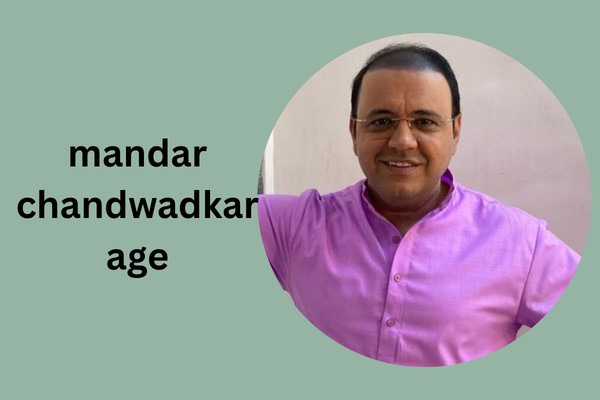
mandar chandwadkar age
Introduction: Mandar Chandwadkar Age
Mandar Chandwadkar is one of the most cherished actors in Indian television, best known for his endearing portrayal of Aatmaram Tukaram Bhide in the long‑running Hindi sitcom Taarak Mehta Ka Ooltah Chashmah. Audiences across India and around the world recognize his face, timing, and character nuances instantly, and the question “How old is Mandar Chandwadkar?” is one of the most frequently searched terms related to his life. In this detailed biography, we explore not only his age but the full story behind the person, the artist, the journey, and the impact he has had on entertainment — from his upbringing and education to his rise in acting and personal life beyond the camera.
Table of Contents
Mandar Chandwadkar Wiki Bio
| Field | Information |
|---|---|
| Full Name | Mandar Chandwadkar |
| Date of Birth | 27 July 1976 |
| Age | 49 years (as of February 2026) |
| Place of Birth | Mumbai, Maharashtra, India |
| Nationality | Indian |
| Occupation | Actor, Theatre Director |
| Known For | Aatmaram Tukaram Bhide in Taarak Mehta Ka Ooltah Chashmah |
| Education | Mechanical Engineering, Guru Nanak Khalsa College, Matunga, Mumbai |
| Years Active | 1998 – Present |
| Theatre Group | Pratibimb |
| Spouse | Snehal Chandwadkar (m. 2007) |
| Children | Parth Mandar Chandwadkar |
| Height | 5 ft 7 in |
| Zodiac Sign | Leo |
| Early Career | Engineer in Dubai (1997–2000) |
| Notable Works | Taarak Mehta Ka Ooltah Chashmah, Marathi films: Mission Champion, Doghat Tisra Aata Sagala Visara |
| Awards & Recognition | Known for long-running role and popularity among TV audiences |
| Website / Social Media | N/A / Official social media profiles |
Early Life – Roots, Family, and Childhood Foundations
Mandar Chandwadkar was born on 27 July 1976 in Mumbai, Maharashtra, India, into a Marathi family rooted in rich cultural traditions. Being born in the mid‑1970s places him in his late 40s — specifically 49 years old as of early 2026.
Growing up in the vibrant environment of Mumbai, a city that naturally breathes cinema, theatre, and performance art, Mandar was surrounded by influences that would later shape his professional choices. However, his path to acting was not straightforward. He hails from a typical middle‑class family where emphasis on education and career stability was strong. Creativity was encouraged, but only alongside scholastic achievement and professional responsibility.
Mandar had a grounded upbringing where values such as hard work, discipline, and respect were instilled early on. These traits have persisted throughout his life and are often reflected in the roles he portrays and the way he interacts with fans and colleagues.
Schooling and Adolescence
Mandar completed his schooling in Mumbai, attending local institutions where he showed early promise not only in academics but in extracurricular arts. While he did not pursue acting professionally at a very young age, his participation in school plays, classroom skits, and dramatic exercises laid a subconscious foundation for his future interest in performance.
Importantly, even at a young age, his flair for humor and his expressive personality made him stand out among his peers — qualities that would later translate perfectly into a career in comedy and television acting.
Education – From Engineering to the Arts
Unlike many actors who begin training in dramatic arts, Mandar took an academic route, pursuing Mechanical Engineering after high school. He enrolled at Guru Nanak Khalsa College of Arts, Science & Commerce in Matunga, Mumbai — a reputed institution with a strong academic background.
In an environment surrounded by technical learning and analytical thinking, Mandar excelled academically, proving his intellectual capability in a demanding discipline. A degree in mechanical engineering is no small achievement, and this educational foundation gave him stability and discipline that would later support his career shifts.
While engineering and acting may appear unrelated on the surface, the rigorous thought process, structured thinking, and persistence required in engineering played an unexpected role in shaping Mandar’s work ethic and approach to character study and performance.
Early Career – Engineering Life in Dubai
After completing his engineering degree, Mandar took a conventional and secure career path by accepting a job as a mechanical engineer in Dubai, one of the world’s leading hubs for engineering and construction.
He worked in Dubai for three years, from 1997 to 2000. This phase was crucial for several reasons:
- It provided financial stability early in life.
- It exposed him to international work culture and discipline.
- It gave him time to reflect on what he truly wanted in life.
Working abroad was a major step — not every young professional chooses to leave their homeland so early. Yet, Mandar did this to build a base for his future and support his family, showing both responsibility and ambition.
However, during this time, the pull toward acting grew stronger within him. Though he was in a well‑paid and secure position, his passion for performance and creative expression never faded. In fact, it intensified.
The Turning Point – Choosing Passion Over Profession
After three years of engineering in Dubai, Mandar reached a pivotal moment in his life — a crossroads where he had to choose between stability and passion.
Many people know the comfort of a secure job and the fear that comes with leaving it. Mandar faced that challenge head‑on. He made a life‑changing decision: he resigned from his engineering job and returned to India to pursue a career in acting.
This choice was neither easy nor without risk. At a time when most people seek financial security and predictable growth, Mandar chose uncertainty, driven purely by the desire to act. That moment marked the beginning of his true artistic journey.
Early Performances – Theatre Days and Pratibimb
Before becoming a household name on television, Mandar’s first creative foray into performance was through theatre, a medium that demands discipline, presence, and live execution.
In 1998, even before leaving for Dubai, he created his own theatre group named Pratibimb. The group was dedicated to showcasing Hindi and Marathi plays, focusing especially on comedic theatre and one‑act plays.
Through Pratibimb, Mandar not only acted but also directed numerous productions. This period was instrumental in shaping his understanding of timing, movement, character development, and audience response — lessons that would later make him an exceptional television actor.
Performing live on stage helped him cultivate:
- Confidence in front of audiences.
- Skills in improvisation.
- Ability to sustain energy without retakes.
- Sense of comedic rhythm and timing.
Theatre, often regarded as the foundation of all acting, provided Mandar with a grounding that set him apart once he transitioned to television.
Transition to Television – First Roles and Early Exposure
Mandar’s transition from theatre to television occurred gradually in the mid‑2000s. His earliest screen appearances were in Marathi television programs — a natural starting point given his Marathi cultural roots and theatre background.
Some of his early television work included roles in Marathi series where he played supporting characters that showcased his versatility and ease in front of the camera. These early roles were not overnight hits, but they allowed Mandar to:
- Understand on‑set dynamics.
- Build professional networks.
- Adapt theatre skills into screen performance.
- Learn the technicalities of television acting.
It was this period of humble beginnings and consistent work that prepared him for future breakthroughs.
The Breakthrough Role – Taarak Mehta Ka Ooltah Chashmah
In 2008, Mandar Chandwadkar was offered a role that would change his life forever — Aatmaram Tukaram Bhide in Taarak Mehta Ka Ooltah Chashmah.
From the very first episode he appeared in, Mandar brought to life one of the most memorable characters on Indian television. Bhide is:
- The secretary of the Gokuldham Society.
- A strict but lovable mathematics teacher.
- A man who values discipline and rules.
- A character who is often the comic catalyst in neighborhood shenanigans.
Mandar’s portrayal was not only convincing — it struck a chord with audiences. He managed to embody the contradictions of Bhide perfectly — stern yet warm, exasperated yet endearing, rule‑bound yet deeply caring. His performance turned Bhide into a character that viewers felt they knew personally.
Impact of Bhide
The role of Bhide was not just another acting credit — it became an iconic character in Indian household entertainment. For more than 17 consecutive years, Mandar portrayed this role, season after season, earning respect, laughter, admiration, and emotional connection from audiences of all ages.
His character became:
- A cultural reference point in Indian comedy.
- A symbol of the “relatable middle‑class Indian personality”.
- A staple figure in one of the longest‑running sitcoms in Indian TV history.
- A character that transcended age, language, and region.
Mandar didn’t just act in the show; he elevated his character to legendary status.
The Age Factor – Why His Age Matters
As of February 2026, Mandar Chandwadkar is 49 years old. While a simple number might not seem significant on the surface, his age reflects the depth of experience and evolution as an artist. Being in his late 40s now, Mandar brings:
- A mature understanding of character nuance.
- Decades of life experience to enrich his performances.
- Emotional wisdom that only years of careful observation can provide.
- The discipline that early theatre training and international work instilled.
His age represents not just a milestone but several overlapping journeys — from student to engineer, from engineer to actor, from theatre to television, and from supporting roles to an iconic national character.
Understanding his age gives context to how much dedication, patience, and persistence his journey required.
Personal Life – Family, Relationships, and Beyond the Camera
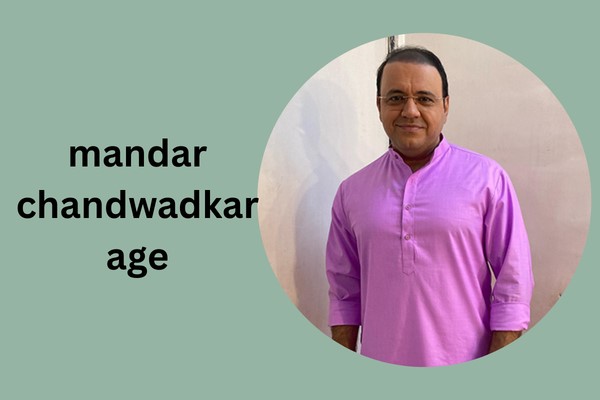
While Mandar Chandwadkar is widely known for his professional persona, his personal life is equally grounded and rooted in simplicity.
He is married to Snehal Chandwadkar, who is herself involved in creative pursuits. The couple tied the knot in 2007, before Mandar’s big break on television. Their relationship stands as a testament to mutual support, shared artistic interest, and a family life built away from excessive public scrutiny.
Mandar and Snehal have a son named Parth Mandar Chandwadkar. Despite Mandar’s fame and enormous public interest in his life, he has preserved privacy around his family, treating personal moments with respect and discretion.
His personal life reflects stability, strong family bonds, and a grounded nature — qualities that also come through in his television roles.
Film and Television Beyond TMKOC
Although his portrayal of Bhide remains the pinnacle of his fame, Mandar’s career includes several other noteworthy appearances across mediums.
Marathi Cinema
Mandar has participated in Marathi film productions where he explored diverse characters beyond sitcom comedy. His film roles allowed him to experiment with new emotional registers and narrative forms, expanding his range as an artist.
Television Appearances
Beyond Taarak Mehta Ka Ooltah Chashmah, Mandar appeared in various television serials that showcased his versatility — from drama to comedy, from character parts to special appearances.
His television journey spans over 30 serials in multiple languages, demonstrating:
- Adaptability
- Professional longevity
- Appeal across genres and audiences
Artistic Approach and Style
What sets Mandar apart as an actor is not just his talent — it’s his approach:
- Observational realism — he watches real people and brings their traits into his characters.
- Physicality in performance — facial expressions, posture, timing, and voice modulation all play a role in his nuanced acting.
- Commitment to authenticity — even comedic roles are anchored in believable human behavior.
- Balance of humor and heart — laughter in his work always contains an emotional layer.
These elements make his performances feel effortless, natural, and deeply relatable.
Influence, Popularity, and Legacy
Mandar Chandwadkar is more than just an actor with a memorable character. His influence stretches into:
- The evolution of Indian television comedy.
- Inspiration for aspiring actors who transition from non‑film backgrounds.
- Representation of middle‑class sensibilities in mass entertainment.
- Longevity and consistency in an industry known for volatility.
His legacy is not measured in awards alone but in the genuine connection millions of viewers feel — from children who laugh at his expressions to adults who appreciate his depth.
Reflecting on Age and Achievement
At 49 years, Mandar Chandwadkar stands at a point where his age reflects wisdom, experience, discipline, and an enduring impact that few achieve in a lifetime.
His life journey is a testament to:
- Following passion despite practical pressures.
- The importance of theatre and foundational training.
- The value of consistency, patience, and humility.
- The power of authentic performance in connecting with audiences.
He exemplifies how age is not a limitation but a layered narrative that adds richness, depth, and emotional intelligence to one’s work.
Conclusion – The Story of a Life Well Lived
Mandar Chandwadkar’s life — from his beginnings in Mumbai, to engineering in Dubai, from theatre experimentation to television fame — is a narrative that reflects courage, creativity, and character.
As of early 2026, at the age of 49, he continues to be one of Indian television’s most beloved actors. But beyond any number, what truly matters is the journey he took — a journey of risk, passion, perseverance, and artistic truth.
Mandar’s story reminds us that age is more than a number — it is the sum of experiences, choices, dedication, and the lives touched along the way.
About the Author